
A restaurant needs as many servers as the tables it expects to have full each hour, divided by the number of tables one person handles comfortably in your style of service. A common rule of thumb for full service is about 4 to 6 tables per server, but the right number for you comes from your own data.
The mistake many restaurants make is staffing the same headcount all shift, or the same every day. Covers are not flat, so staffing should not be either.
Step 1: Find how many tables one server handles in your venue
It depends on:
- Style of service. Full service with coursed dishes needs more attention than a café or counter service.
- Layout. Long walks to the kitchen and bar, stairs and terraces reduce tables per person.
- Support. With a runner or busser bringing plates and clearing, a server covers more.
- How guests order and pay. When guests order and pay themselves, a lot of the running disappears.
Ask your best servers how many tables they hold comfortably on a full night without service slipping. That is your number.
Step 2: Look at covers by hour, not by day
Take the last four weeks of orders and count how many tables were open in each hour, for each day of the week. You will clearly see the peaks, say Friday 8:30pm to 10:30pm, and the dead hours.
Step 3: Do the maths
Servers per hour = occupied tables that hour ÷ tables per server
Example: in a 30-table restaurant, about 27 tables are full on Friday at 9pm. If one server comfortably handles 6 tables, you need 27 ÷ 6 = 4.5, so 5 people at peak. At 6pm with 10 tables full, 2 are enough.
Round up at peak, and add a host if the restaurant does not already have one.
Step 4: Build staggered shifts
Instead of everyone starting at 6pm and staying to close, stagger:
| Shift | Hours | Role |
|---|---|---|
| Opener | 5:30pm to 11:30pm | Set up, first tables, cash-up |
| Peak | 8pm to midnight | Cover the rush |
| Closer | 7pm to close | Last tables, clean-down |
You cover the rush with the same people and fewer total hours.
Step 5: Look ahead, not only back
Next week’s rota should reflect what you already know: bookings, bank holidays, matches, weather, local events. A quiet Saturday because of rain and a packed Tuesday because of a holiday break any static rota.
Step 6: Measure and adjust
Once a month, look at two numbers: table wait times at peak, and labor cost as a percentage of revenue per shift. The first tells you if you are short, the second if you are over. And make sure every change respects working-time rules and keeps your schedule records honest.
How Galadier helps
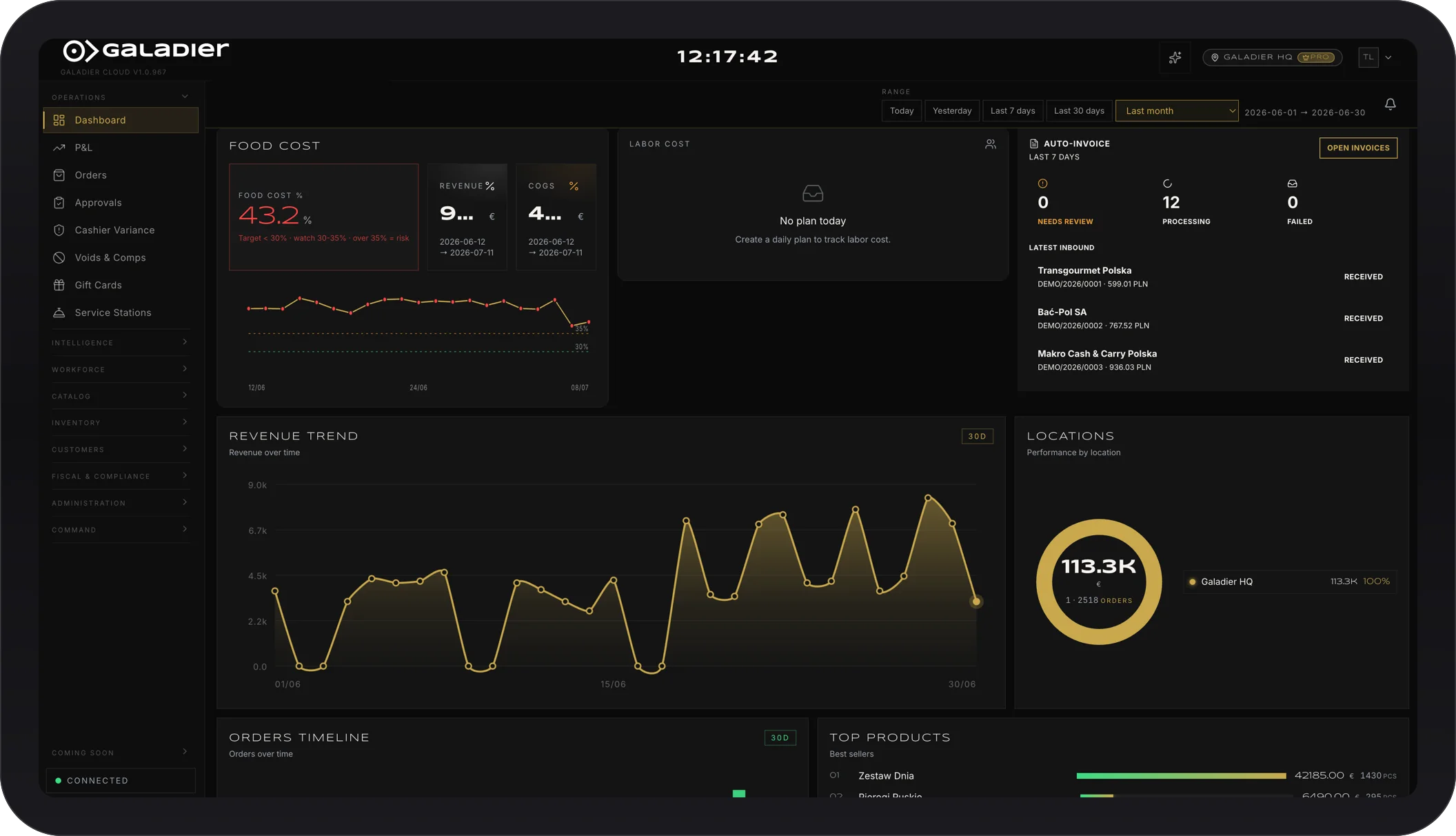
Galadier shows you ahead of time how busy tomorrow will be and which hours will fill up, so you put people where they are needed. With QR ordering guests order and pay themselves, so each server covers more tables without service slipping. See Galadier Intelligence, pricing, or talk to us.